
Water heater repair and installation in Littleton, CO
When cold showers hit or your basement water heater starts leaking, you need fast diagnosis and code-compliant repairs from a specialist. Operating from our shop on West Mineral Avenue, we provide transparent repair and replacement for tank, tankless, and hybrid heat pump water heaters across Littleton and the southwest Denver metro.
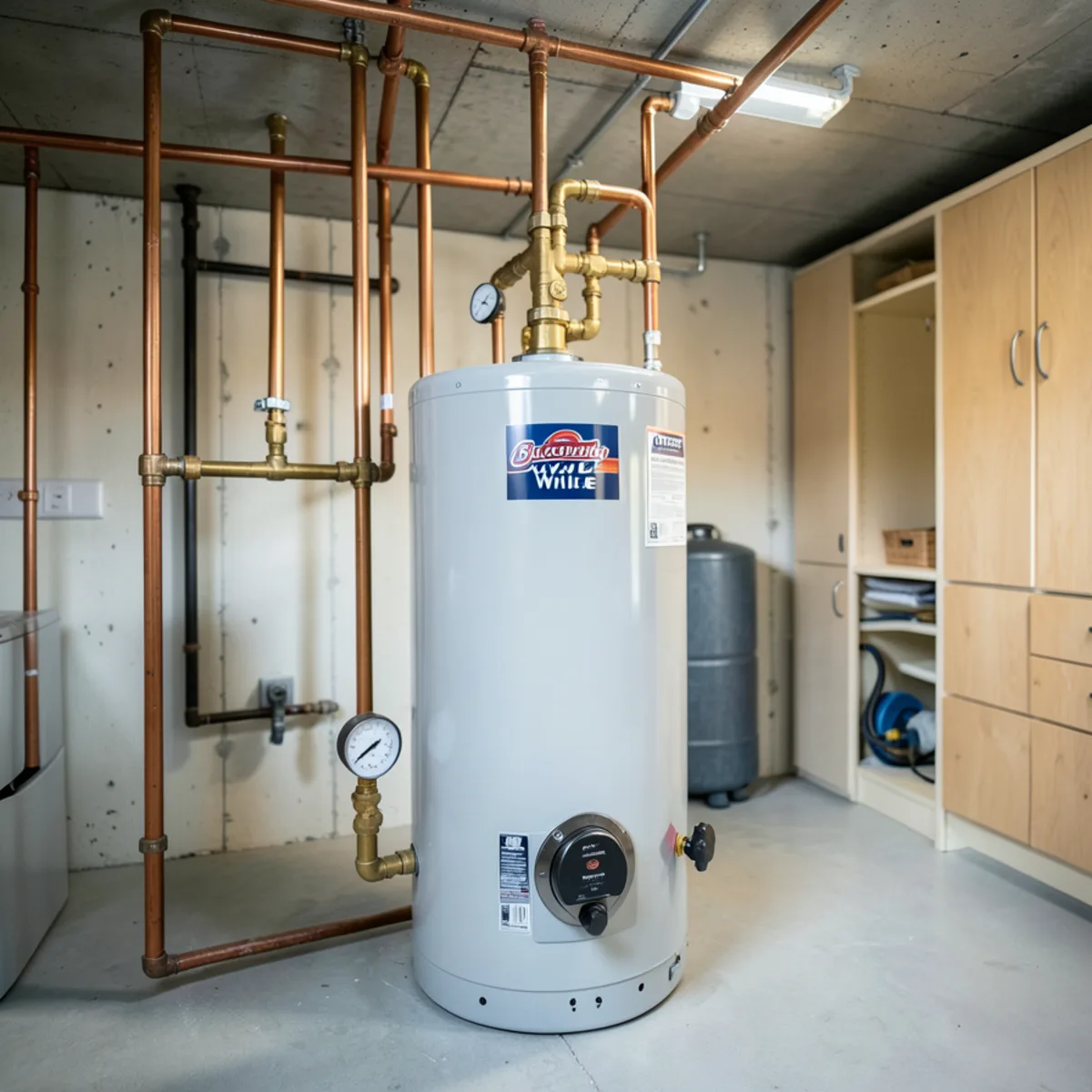
What is wrong with your water heater?
Select your specific symptom below to understand likely causes in Front Range homes and view step-by-step repair options.
No Hot Water at All
Sudden loss of hot water in winter or morning rush. Culprits include extinguished pilot lights, failed thermocouples, or tripped 240V high-limit switches.
Water Leaking Around Tank
Water pooling beneath the heater or dripping from the relief valve. We distinguish between repairable plumbing pipe fittings and non-repairable tank ruptures.
Loud Rumbling or Popping Sounds
Kettle-like popping noises caused by trapped steam bubbles beneath dense mineral sediment blankets along the bottom heating dome.
Pilot Won't Stay Lit
Pilot flame extinguishes as soon as the control knob is released. Often caused by thermocouple oxidation, clogged pilot orifices, or dirty Lo-NOx arrestors.
Water Only Gets Lukewarm
Showers start warm but turn cold in less than 5 minutes. Classic symptom of a burned-out lower heating element or defective upper thermostat staging.
Tankless Cold Water Sandwich
Water turns ice cold in the middle of a shower or digital controller flashes error codes. We service Navien, Rinnai, and Noritz tankless systems.
Leaking Tank or Burst Water Heater? Take These 4 Steps Right Now
- •1. SHUT OFF COLD WATER: Turn the cold water shutoff valve located directly above the heater on the right-hand pipe clockwise until tight (or quarter-turn perpendicular if it is a ball valve).
- •2. SHUT OFF FUEL / POWER: Turn the gas control knob on the front of the heater to OFF. If you have an electric water heater, flip the dedicated double-pole 30-amp breaker in your electrical panel to OFF.
- •3. RELIEVE PRESSURE: Open a hot water faucet at an upstairs bathroom sink to break internal line vacuum and relieve pressure.
- •4. AVOID SCALDING WATER: Water leaking from a ruptured tank can exceed 140°F. Keep children, pets, and electrical cords away from the pooling water, then call our Littleton dispatch desk at (201) 277-9344.
Water heaters in Littleton, Colorado homes
Understanding elevation derating, municipal water mineral scale, and Arapahoe County permit requirements.
Littleton sits at an average elevation of 5,351 feet above sea level, nestled along the South Platte River corridor between downtown Denver and Chatfield Reservoir. While this provides spectacular Rocky Mountain views, high-altitude physics directly impacts water heater performance and safety. Standard atmospheric gas water heaters naturally derate by roughly 4% for every 1,000 feet of elevation due to thinner air and reduced atmospheric oxygen. A standard 40,000 BTU water heater installed in a Littleton basement operates at roughly 31,500 effective BTUs. If equipment is installed without high-altitude calibrated burner orifices and proper draft hood clearances, incomplete combustion, heavy soot accumulation, and backdrafting can occur.
Housing stock across Littleton varies significantly by neighborhood. Older subdivisions around Historic Downtown Littleton, Broadridge, and Kettering Park constructed between 1950 and 1975 feature mid-century ranches and brick cottages. These homes typically have utility closets with tight doorways, low ceiling clearances, and older galvanized or copper piping. In contrast, South Littleton neighborhoods near W Mineral Ave, Columbine, and TrailMark built in the 1980s and 1990s feature large multi-story layouts with expansive basements. In these homes, 50-gallon power-vent gas heaters and dual-tank configurations are common.
Littleton Water Hardness (7–9 GPG)
Littleton drinking water supplied via Denver Water and local alluvial wells contains 7 to 9 grains per gallon (GPG) of mineral hardness (120–150 mg/L). Heated calcium carbonate precipitates out of solution, coating bottom tank heads in a concrete-like crust and clogging tankless heat exchanger channels. Annual flushing is essential to prevent rumbling and premature tank failure.
City of Littleton Building Permits
The City of Littleton Building Division requires a residential plumbing permit and an official inspection for every water heater replacement. Permitting ensures that gas flex lines, sediment traps, high-altitude draft venting, and code-mandated thermal expansion tanks are fully verified by a city building inspector.
Effective January 1, 2026, Colorado HB23-1161 established mandatory Lo-NOx emissions standards for all gas-fired water heaters sold in Colorado. Units at or below 75,000 BTU/hr must produce no more than 10 nanograms of nitrogen oxide per Joule (10 ng/J). All replacement equipment we install in Littleton is 100% compliant with Colorado Lo-NOx laws and Energy Star guidelines.
Tank, tankless or heat pump for your Littleton home
Choosing the right water heater comes down to household demand, basement space, fuel availability, and local utility rebates.
| Feature | Standard Tank (Gas/Electric) | Tankless (On-Demand Gas) | Hybrid Heat Pump (Electric) |
|---|---|---|---|
| Expected Lifespan | 8 to 12 Years | 15 to 20 Years | 10 to 15 Years |
| Efficiency (UEF) | 0.60 to 0.68 UEF | 0.90 to 0.96 UEF | 3.50 to 4.00+ UEF |
| Space Required | Floor footprint (approx. 24" x 60") | Wall-hung (zero floor space) | Needs 700 cu. ft. airflow or louvered door |
| Winter Groundwater Output | Fixed storage volume (40–50 gal) | Continuous flow (sized for 38°F inlet) | High efficiency hybrid electric recovery |
| 2026 Utility Rebates | None standard | Occasional gas utility rebates | Up to $1,500 (Xcel) + $250 (LELWD) |
| Best Fit For | Direct economical replacement in existing closets | High hot water demand, back-to-back showers | All-electric homes, basements, maximum efficiency |
Water heater replacement costs in Littleton
Every home and mechanical closet is unique. We provide upfront written quotes before any work begins.
According to published Front Range home improvement data, standard residential tank water heater replacements in the southwest Denver metro typically range between $1,001 and $1,762 installed, depending on tank capacity, venting style (atmospheric vs. power-vent), and code provisions. High-efficiency tankless water heater conversions, which require gas line upgrades and dedicated exterior venting, generally range from $2,800 to $5,200.
City of Littleton building permit and inspection fees generally run between $75 and $200. Other factors that influence project scope include the condition of the cold water shutoff valve, seismic strapping, thermal expansion tank calibration, and whether older galvanized piping must be transitioned to copper using dielectric unions.
Areas we serve from our Littleton shop
Based at 1221 W Mineral Ave in Littleton, we provide prompt water heater service across Arapahoe, Douglas, and Jefferson counties.
Arapahoe County
Arapahoe County encompasses a wide architectural continuum spanning nearly seven decades of Front Range suburban development. In western communities like Littleton, Englewood, and Sheridan, residential neighborhoods consist largely of 1950s and 1960s brick ranches and tri-level layouts with utility rooms tucked into tight laundry closets or partially finished crawlspaces. Moving eastward through Centennial, Greenwood Village, and southern Aurora, the housing stock shifts toward substantial two-story single-family homes built between 1980 and 2015. Over eighty-five percent of these suburban residences feature fully finished basements where water heaters share utility space alongside high-efficiency HVAC equipment. Because water heaters installed in finished living areas pose substantial structural flood risks upon tank failure, installations across Arapahoe County demand high-grade aluminum drain pans, full-bore drain pipes routed to floor drains, and automatic moisture-sensing shutoff valves. Our licensed technicians inventory specialized standard-vent, power-vent, and condensing tankless units to match the unique mechanical envelope of every Arapahoe home.
Explore County Service →Jefferson County
Jefferson County spans a dramatic geographic transition, rising from the urban plains of Lakewood and Wheat Ridge into the rugged hogbacks and foothills of Ken Caryl, Morrison, and Golden. This topographical range creates distinct housing typologies with unique water heating requirements. Eastern suburban neighborhoods predominantly feature 1950s and 1960s brick ranches and 1970s split-levels with basement utility rooms or garage mechanical closets. As you move westward toward the hogback ridges, custom multi-level homes and foothills estates incorporate walk-out basements, extensive hydronic floor heating loops, and multiple luxury bathrooms. In these foothill environments, steep canyon winds frequently cause downdrafting in conventional natural-draft chimneys, blowing out pilot flames and spilling combustion gases. Our licensed technicians resolve these issues by installing sealed-combustion power-vented tanks or direct-vent condensing tankless systems that draw outside air through sealed PVC or polypropylene pipes, ensuring reliable operation during severe mountain windstorms.
Explore County Service →Douglas County
Douglas County ranks among the fastest-growing regions along the Front Range, distinguished by expansive master-planned suburban developments established from the mid-1980s through the present day. Communities such as Highlands Ranch, Castle Pines, and the rolling subdivisions of Parker and Castle Rock feature substantial multi-level residences ranging from 3,200 to over 5,500 square feet. Nearly all of these properties incorporate fully finished basements containing dedicated mechanical rooms where water heaters operate adjacent to forced-air furnaces. In many original builds, contractors installed basic 50-gallon atmospheric storage tanks that struggle to satisfy modern multi-bath domestic demands or high-volume soaking tubs. As these original builder units surpass their ten-to-fifteen-year life cycles, homeowners face critical replacement decisions. Upgrading to high-capacity 75-gallon power-vented units or high-efficiency condensing tankless systems with dedicated recirculation lines represents the gold standard for restoring reliable, continuous hot water.
Explore County Service →Bordering Cities (Tier 1 Priority Dispatch):
Our Littleton Shop Base
1221 W Mineral Ave, Littleton, CO 80120 • Conveniently located near the Littleton–Mineral light rail station along the South Platte corridor.
Why Littleton homeowners choose our team
We focus 100% on water heating equipment, delivering deeper technical mastery than general multi-trade companies.
Water Heating Only
We don't clean drains, fix furnaces, or service air conditioners. Our trucks are stocked with water heater gas valves, thermocouples, incoloy heating elements, and expansion tanks.
Colorado Code Compliance
Every replacement is installed to current Colorado plumbing code, meeting HB23-1161 Lo-NOx emissions limits and receiving a City of Littleton building permit and inspection.
Altitude Calibration
We calculate combustion airflow and high-altitude derating for Front Range elevations (5,300–6,200 ft), preventing dangerous carbon monoxide backdrafting and soot buildup.
Upfront Written Estimates
You receive an honest written price before any wrench touches a pipe. We explain repair vs. replacement options clearly without high-pressure sales tactics.
Frequently Asked Questions About Water Heaters in Littleton, CO
A Lo-NOx water heater is a gas unit meeting Colorado HB23-1161 nitrogen oxide limits. Units at or below 75,000 BTU/hr may emit no more than 10 ng/J, and units above that up to 2 million BTU/hr are capped at 14 ng/J. The standard took effect January 1, 2026. The law also requires propane water heaters shipped into Colorado to be ENERGY STAR certified.